


 Back to all
At Axess Systems, we’re frequent attendees of Dell Technologies World, having been there in some form since 2022. But between 2025 and 2026, we saw a marked change in the event’s focus.
As our Head of Technology Kris Haynes discusses, artificial intelligence has moved from being talked about as a future, emerging shift to a current, established reality – which means a lot of business thinking has to change too…
Kris’ View from Dell Technologies World 2026
I’ve spent the last few days at Dell Technologies World 2026 in Las Vegas, sitting through keynotes, technical deep dives and more AI discussions than I can count.
That probably isn’t surprising, but what was surprising was how different the conversation felt compared to even just a year ago.
Last year, AI still felt like a mixture of excitement, experimentation and in some cases, nerdy optimism. The technology was impressive, but many companies I regularly spoke to were still trying to work out where it fitted and what value it would actually deliver.
This year, it truly felt different. The biggest takeaway from Dell Technologies World 2026 wasn’t another AI demo, benchmark, or prediction about the future. It was the growing realisation that AI is no longer being treated as a side project or innovation playground. Enterprises are now redesigning infrastructure, operations and governance around AI as a permanent workload. For the first time, it felt like the industry had collectively stopped asking whether AI was useful and started asking how quickly it could be operationalised.
That shift followed everywhere. It came from CEOs talking about competitive advantage. It came from infrastructure architects trying to work out where these workloads will run. It came from security teams wrestling with governance and sovereignty. It even came from the vendors themselves, who spent less time talking about theoretical possibilities and more time discussing operational reality.
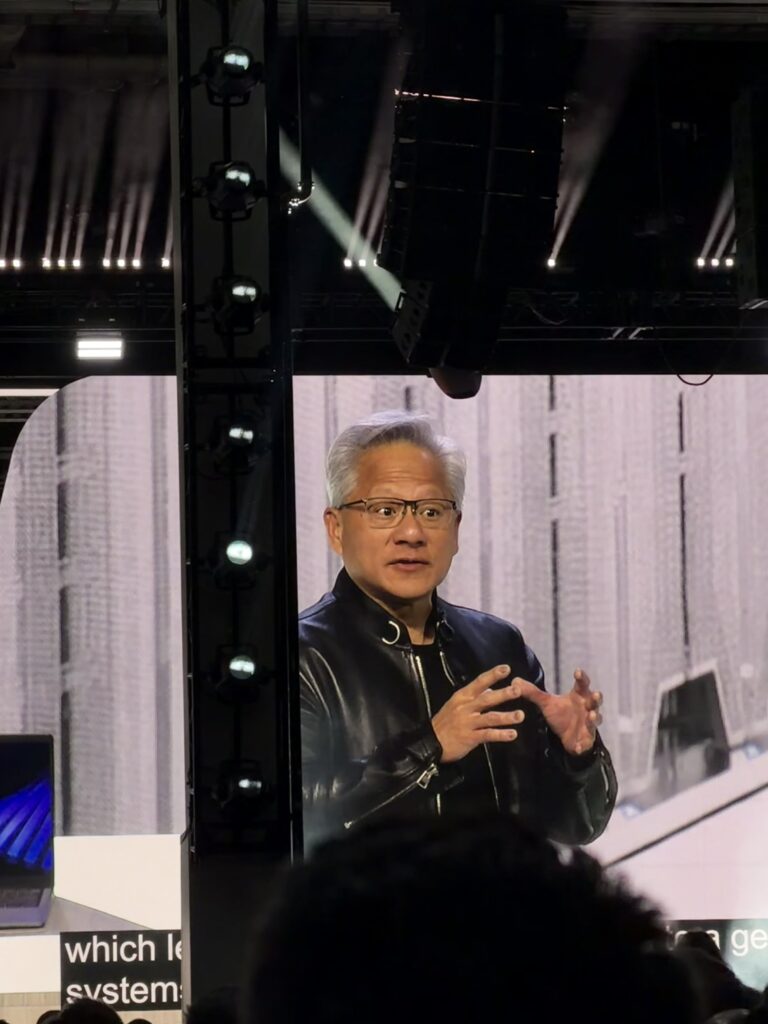
One comment that stuck with me came from Jensen Huang, who described this as the arrival of the era of “useful AI”. For once, that didn’t feel like marketing, and you could almost feel the collective lightbulb moment across the room.
The sessions were full of examples where AI is already delivering measurable outcomes. One statistic that kept appearing suggested that roughly 5% of users are currently generating 95% of AI value within organisations. These users were repeatedly described as “Super Intelligence Users” – people who have integrated AI into their daily workflows and are now driving innovation, automation and business change from within. I mean, if nothing else, it’s certainly a label most of us in technology would quite happily adopt!
It was one of the first times I’ve attended an event where AI felt less like a future capability and more like a standard business tool that organisations are expected to understand and operationalise. For me, that’s where things started getting interesting, because once AI stops being an experiment, it starts creating entirely new challenges.
Token consumption becomes a financial consideration, data locality becomes an architectural decision, governance becomes a design requirement, and infrastructure teams suddenly find themselves back at the drawing board, designing platforms around workloads that barely existed a few years ago. This sends even the most experienced of us quickly back to school.
AI Has Moved From Interesting To Operational
One topic that surfaced repeatedly throughout the event was token consumption. I’ll be honest, “tokenomics” still sounds like something invented by a marketing department, but the underlying point is difficult to ignore.
Forecasts presented during the sessions suggested AI token consumption could increase by more than 3,400% by 2030. That sounds like an abstract number until you start thinking about what it means in practice (and there have already been several articles about large organisations burning millions of pounds in unplanned token consumption).
Every AI interaction has a cost – every prompt, every agent workflow, every retrieval request, every automated business process, consumes resources somewhere. So as organisations begin deploying hundreds or thousands of AI assisted processes, token consumption rapidly shifts from being a technical metric to becoming an operational cost centre.
The comparison that kept coming into my head was cloud adoption. Remember the mid to late 2010’s? Most organisations didn’t get caught out because cloud technology failed. They got caught out because consumption grew faster than governance and cost control ran away from them.
AI feels like it is heading down a very similar path. The organisations that get ahead will not just be the ones that deploy AI fastest. They will be the ones that understand where value is being created, where costs are accumulating and how to govern both effectively. (I almost want to bookmark this prediction and come back in 18 months’ time).
Infrastructure Is Being Rebuilt Around AI
Agentic AI Changes the Architecture Conversation
This was probably the most interesting part of the event for me. For the last few years, AI infrastructure conversations have largely revolved around GPUs. More GPUs. Bigger GPUs. Faster GPUs. That focus hasn’t disappeared, but Dell Technologies World made it very clear that the next challenge is significantly broader.
Agentic AI changes the architecture conversation completely.
One of the better analogies discussed during the event compared AI agents to how employees operate day-to-day. Large-scale reasoning may happen centrally, but lots of smaller decisions and actions happen locally, close to where the work is actually being performed. Once you start thinking about AI in those terms, the infrastructure requirements become much more complicated.
From GPU Scaling to Systems Engineering
GPUs remain critical for acceleration and model execution, but CPUs suddenly matter again. Memory architecture, networking, storage performance, data locality and more all start to be considered. In short, AI starts looking less like a GPU problem and more like a systems engineering problem. The message was consistent: AI environments will only ever perform as well as their weakest architectural layer.
The GB300 Moment
And then Dell announced the GB300.
I was already familiar with the GB10 platform and had spent some time looking at where it could fit within enterprise environments. The GB300 was the first announcement during the keynote that genuinely made me stop taking notes and pay attention.
Dell positioned the system as supporting up to one trillion parameter open-weight models locally, combining 252GB of HBM3e memory with nearly 500GB of system memory in a deskside form factor. It’s one of those systems that immediately makes the infrastructure part of your brain start calculating power, cooling, networking, and budget implications.
And yes, I absolutely want one! Perhaps keep a lookout for my GoFundMe page…
The announcement also reinforced a much larger point: the future of AI is unlikely to be entirely centralised. The industry is clearly moving towards a hybrid operating model where reasoning, inferencing and automation workloads are distributed across cloud platforms, datacentres and endpoint devices depending on performance, governance and cost requirements.
AI infrastructure is, again, a systems engineering problem, not a GPU purchasing exercise.
“Move AI to the Data”
As we entered the second and third days, another phrase kept appearing. It showed up in keynotes, technical sessions, architecture discussions and vendor conversations.
“Move AI to the data, not data to the AI.”
The more I listened, the more I realised it was probably one of the most important messages from the entire event.
At Axess Systems, we’ve spent more than 25 years helping organisations deliver applications through virtual desktops and application virtualisation platforms. One principle has remained remarkably consistent throughout that time:
If you want the best user experience, keep users as close to their applications as possible.
Dell Technologies World felt like the AI equivalent of that lesson.
The Limits of the Hyperscale-First Model
For the last several years, most enterprise AI conversations have assumed a hyperscale-first model. Push data into a large AI platform, process it centrally and consume the results remotely.
That’s simple in theory, but much harder in practice. As organisations begin moving beyond chatbots and experimentation into operational AI, challenges of latency, governance, data sovereignty and more begin appearing very quickly.
When Theory Meets Reality
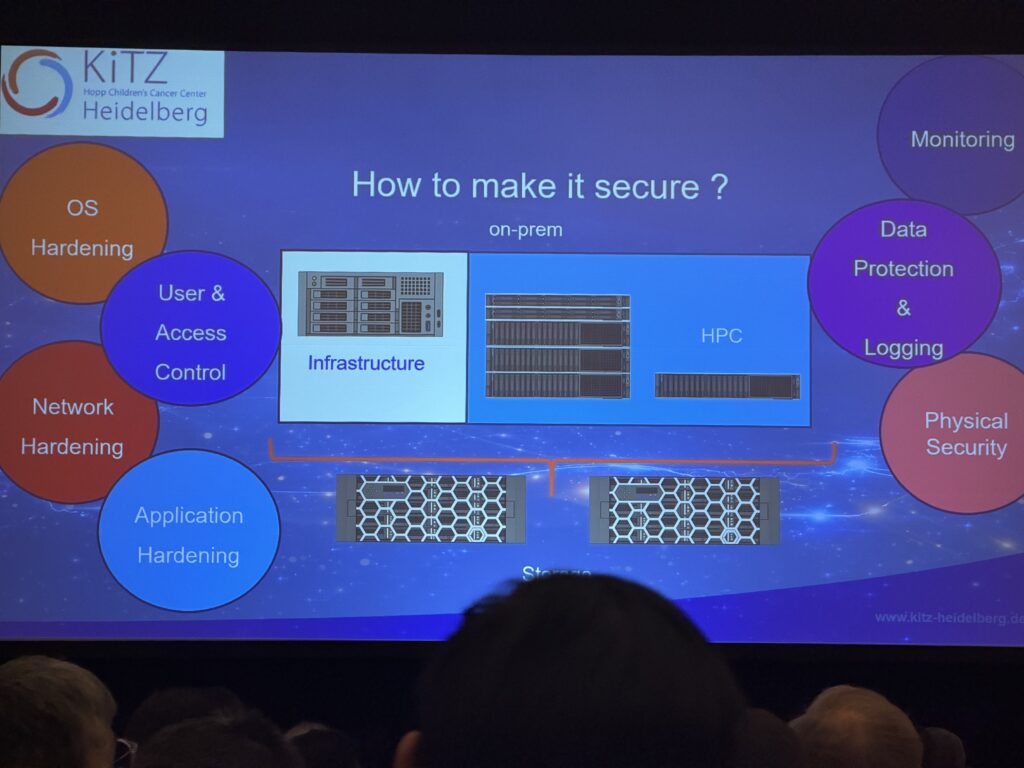
These aren’t theoretical concerns either. One of the most interesting sessions I attended featured Robert Autry, Head of Clinical Bioinformatics at Hopp Children’s Cancer Centre Heidelberg. The discussion focused on healthcare, cancer research and genomic datasets. The kind of information where mistakes have genuine real-world consequences.
One comment particularly stuck with me.
In many of these environments, true anonymisation becomes incredibly difficult. Genomic information is often so unique that even after significant efforts to anonymise datasets, there remains the potential for re-identification when combined with other sources of information.
That changes the conversation completely! Suddenly, this isn’t just about model accuracy or inference speed. It’s about trust and governance, in IT and security teams with our data. It’s about understanding exactly where data is located, who can access it and what happens to it throughout its lifecycle.
The result is a growing push towards local inference, secure on-premises AI processing and distributed AI architectures. Then, when you start looking at AI through that lens, something else becomes obvious… this isn’t only about security.
It’s also about economics. Consider this:
- Every time data leaves an environment.
- Every time an AI agent calls an external service.
- Every time a workflow consumes tokens against a hosted model…
Somebody pays for it.
Just as cloud consumption forced organisations to become more conscious of workload placement, AI is beginning to create similar conversations around inference placement.
The cheapest place to run AI isn’t always the best place. The fastest place isn’t always the safest place, and the most secure place isn’t always the most cost-effective.
The organisations that succeed will likely be the ones that understand how to balance all three.
That’s why the phrase “move AI to the data” appeared so frequently throughout Dell Technologies World. It’s not really a technology statement; it’s an architectural one.
Security and governance are becoming core AI architecture
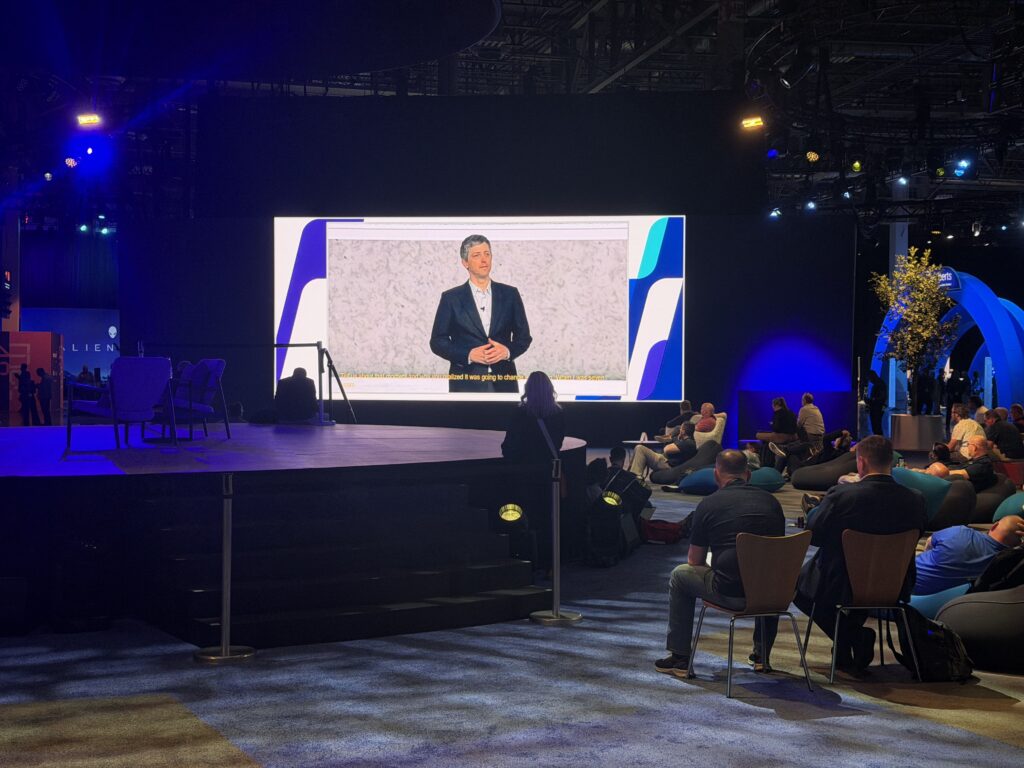
One thing genuinely surprised me during Dell Technologies World. For an event centred around AI, there was remarkably little discussion about which model or platform might be best. There was no shortage of announcements, benchmarks and product launches, but the conversations that seemed to matter most were based around governance, identity, auditability, scalability and security.
The further organisations move towards operational AI, the more these topics become unavoidable. That was particularly evident during several healthcare-based sessions, where discussions moved quickly beyond model capability and into the practical realities of handling sensitive data.
That creates new challenges:
- Who can access AI systems?
- What data can they see?
- How are decisions logged?
- How are actions audited?
- What happens when an autonomous agent makes a decision that impacts a business process?
These questions aren’t theoretical anymore. They’re operational.
Another message came through across multiple sessions. Security teams need a seat at the table far earlier in AI projects than many organisations currently expect. Historically, infrastructure teams would build a platform, security would review it, and the business would deploy it. AI doesn’t fit that model particularly well.
Governance, observability, identity and compliance need to be part of the design from day one. Retrofitting them later is likely to become one of the biggest barriers to successful adoption. Again, I’m seeing this regularly in many active conversations with customers – people avoid early security discussions due to perceived red tape, only to have projects blocked at the final stage because of them.
As AI agents become increasingly autonomous, organisations will need to stop thinking of them as software tools and start thinking of them as privileged operational systems, because that’s effectively what they are becoming.
Final Thoughts
Walking away from Dell Technologies World, the strongest takeaway wasn’t that AI is coming – that conversation is already over.
The real shift is that infrastructure vendors, software providers and enterprise architects are now redesigning systems around AI as a permanent operational model. For years, we’ve talked about AI as something that would eventually transform the enterprise – and this year felt different.
For the first time, it felt like the enterprise was beginning to transform itself around AI.
The organisations that succeed over the next few years will probably not be the ones with the largest models, the most GPUs or the biggest budgets. They will be the organisations that can operationalise AI securely, observably and as close to their data as possible.
And if Dell Technologies World 2026 is any indication, that transformation is already well underway.
As a Dell Technologies Gold Partner, Axess Systems gets exclusive Dell tools, best practices, and the latest technical updates – meaning we can offer more ways for you to deploy Dell technology, and support you the entire way.
To learn more, give us a call on 01773 88260 or email [email protected].
 Previous