


 Back to all
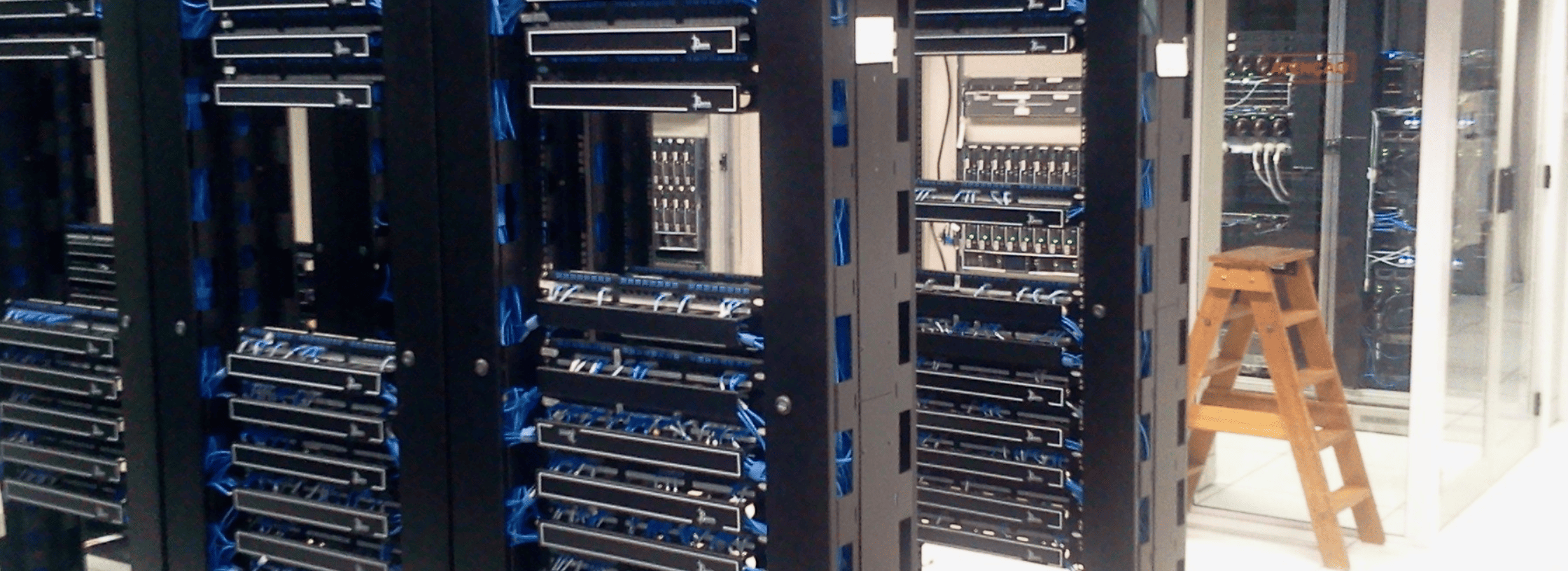
As we’ve seen from our own visits to training sessions and events, IT infrastructure never stays the same for long. It makes sense, then, that this would also be true specifically for workloads.
Predictably, all this change has left companies in a bind. Their workloads need to be placed somewhere, but where is best, and why?
That uncertainty was at the heart of our latest webinar, where we brought together Ihab El Ghazzawi (EMEA AI & Emerging Technologies Partner Officer, Dell Technologies), Surjit Gudu (Technical Presales Consultant, TD SYNNEX) and Ebum Ani-Agbaje (Data Centre Specialist – Channel, Dell Technologies) for a roundtable discussion chaired by our Head of Technology, Kris Haynes.
Webinar Recap
Outcome-Driven Infrastructure Strategy
After Kris’ “state of the nation” introduction – which gave context to just how many factors impacting IT have shifted even within the last year – Ihab elaborated on the complexities organisations face today with data-centric workloads across edge, core, and cloud environments.
With workloads becoming ever more diverse and having different infrastructure characteristics, he highlighted how important it was to define specific, measurable outcomes such as faster deployment, cost reduction over a defined period, or strict recovery time objectives.
He mentioned a philosophy of Dell as a company – the notion that “cloud is not a location, but an operating model”. This emphasised the need for flexibility between public cloud, private cloud, and on-premise solutions, rather than a rigid, “one-size-fits-all” approach.
Though acknowledging that the cloud may be the best for some workloads, Ihab critiqued pure cloud-first strategies as too simplistic. He explained that blindly following them in order to stick to a trend risks trade-offs, including cost overruns, vendor lock-in, egress fees, and operational unpredictability.
Instead, he advocated for a hybrid model, where workloads run in whatever placement area is optimal for them.
Workload Placement Considerations
Ebum continued this theme, explaining the key criteria that need to be considered if people want to place workloads more intentionally. Some of these included:
- Latency sensitivity
- Data generation and location
- Business-critical nature
- Security and governance constraints
- Total cost of ownership (and hidden costs like data transfer fees)
With this grounding, Ebum introduced tools like Live Optics and Dell AIOps. She framed them as essential to transitioning from assumption-driven decisions to evidence-based workload management:
Real-World Use Cases and Challenges
Another key section of the webinar saw Surjit translate this theory to real-world practice, outlining how many large companies have moved their workloads from cloud back to on-premise due to cost, performance, and governance reasons.
Examples from insurance to software underscored what the webinar had already made clear: workload placement isn’t a one-time decision. To get the best out of it, you need to consistently reevaluate the impact of where your workloads are placed, and be willing to change if the evidence says that’s necessary.
AI Workloads: Regulatory, Security, and Backup Considerations
Kris and the panellists also discussed the thinking behind our exclusive Guide to Workload Placement, focusing on how workload placement is impacted by regulations (like HIPAA, GDPR, DORA), and should be placed differently depending on data sensitivity and compliance.
Intrinsic security by design, including AI-driven ransomware detection and governance, was highlighted as essential. As Ebum phrased it:
“Security shouldn’t be an afterthought. When it comes to a ransomware attack, it’s not a matter of if it happens, it’s a matter of when – and how you recover.”
Hybrid environments are also changing the nature of these security threats – increasing attack surfaces and making central visibility through tools like Dell AIOps a key requirement.
Practical Guidance and Recommendations for AI Workloads
In the session’s closing Q&A, the panel responded to audience questions on placing AI workloads amidst uncertainty. They suggested various tactics to make the process smoother:
- Begin with small-scale pilots or proofs of concept, ideally on-premise to enable close control and telemetry gathering.
- Use detailed workload assessments with Live Optics and cost-performance analysis to inform scaling decisions.
- Recognise AI as a distributed, progressive journey – processing may occur on endpoints through to centralised units depending on latency, data gravity, and workload size.
- Encourage flexibility and ongoing reassessment rather than fixed placement.
Ultimately, the session emphasised that organisations benefit most from a measured, informed, and adaptable IT strategy—leveraging the right technologies and partnerships to meet their unique and changing workload demands.
Thank you to Kris, Ihab, Ebum, and Surjit for lending their time and expertise! Want to see the full discussion? Watch the webinar now.
And if you’re ready to start placing your workloads more intentionally, download our free Workload Placement Guide.
 Previous